Building Confidence, Control, and Capacity
A scoliosis diagnosis can raise a lot of questions — Can I lift? Should I avoid loading my spine? Will exercise make things worse?
At Active EP, we approach scoliosis differently. Rather than trying to “fix” the spine, we focus on helping your body move better, stronger, and more confidently with the spine you have.
“We’re not trying to straighten your spine — we’re helping your body adapt to it.”
— Alex, Exercise Physiologist
Understanding Scoliosis: Why Asymmetry Matters
Scoliosis is a three-dimensional spinal condition, involving:
Key muscle differences around the curve:
Alex’s key clinical message is simple: it’s important to understand the direction of the curve because it guides how we tailor training.
“Understanding the direction of your curve helps guide how we strengthen and stretch — it’s not one-size-fits-all.”
— Alex
The Role of Functional Strength in Scoliosis
Our goal is not correction — it’s control.
Functional strength training helps to:
Importantly, both sides often need strengthening — sometimes for different reasons. One side may be long and underactive, while the other is short but lacks endurance.
“We’re not trying to ‘fix’ your spine… we’re helping your body move better with it.”
— Alex
How We Assess Scoliosis at Active EP
Our 80/20 Priority Assessments
Alex’s extra lens: if ForceFrame is available, he’s most interested in identifying potential hip strength asymmetries that may be contributing to offloading patterns.
Using Technology to Guide Smarter Rehab
ForceFrame (VALD)
HumanTrak (VALD)
These tools help us measure function – not just posture.
Alex’s Favourite Exercises for Scoliosis Care
Stretching: (Concave Side Focus)
Strengthening (Control + Capacity)
Resisted Lumbar side flexion (TheraBand or Cable)
These exercises are often integrated alongside:
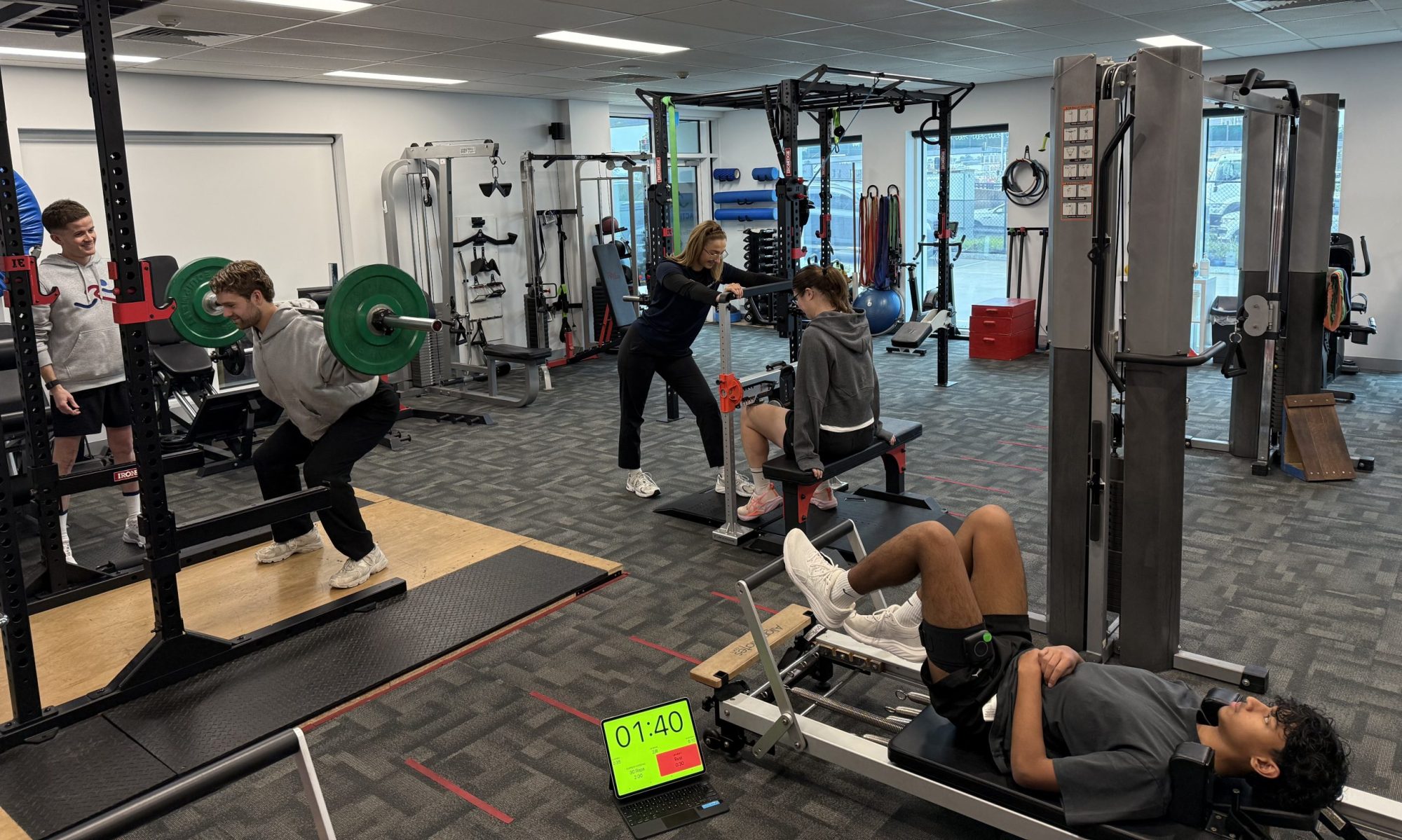
Overcoming Fear of Loading the Spine
Many people with scoliosis worry that lifting or loading will cause harm.
“I’ve had a pretty gnarly curve and wore a brace for over two years — it’s never impacted my ability to be active. I think being active my whole life, and doing unilateral exercises, helped me adapt to my skeleton.”
— Alex
“It’s actually quite empowering to work with and adapt your own skeleton.”
— Alex
Real-World Example
“Sarah,” a 32-year-old office worker, presented with long-standing scoliosis and recurring lower back stiffness. She avoided gym training, worried that loading her spine would worsen her curve.
After a comprehensive assessment, her Exercise Physiologist identified significant side-to-side differences in trunk endurance and hip strength. Her program focused on improving lateral trunk control, strengthening her hips, and gradually introducing unilateral strength exercises. Visual feedback from movement analysis helped her understand her movement patterns and build confidence.
Over time, Sarah reported less stiffness, improved confidence with lifting, and greater trust in her body’s ability to handle load.
This case highlights how functional strength and education can empower people to move confidently with scoliosis.
Evidence at a Glance
| Study | Key Finding | Clinical Takeaway |
|---|---|---|
| Negrini et al., 2018 | Exercise can improve function and quality of life in scoliosis care. | Supports strength-based, non-surgical management alongside education. |
| McGill, 2016 | Trunk endurance is a major contributor to spinal stability and control. | Emphasise endurance and control early, then progress to strength. |
| Wong et al., 2019 | Asymmetrical loading can be trained safely when progressed appropriately. | Unilateral and offset loading can be useful when coached and dosed well. |
| Schreiber et al., 2016 | Targeted exercise can improve postural control and movement awareness. | Reinforces the value of individualised EP-led programming. |
Clinical synthesis: Current evidence supports exercise-based management of scoliosis that prioritises trunk endurance, hip strength, and functional movement quality. At Active EP, we apply this through individualised assessment, progressive loading, and education — focusing on building resilient, adaptable systems rather than chasing structural change.